“Getting Roasted by an AI” Went Viral — How Pingo AI Hit $500K MRR in 14 Months on 200M TikTok Views
Two college roommates built an AI language tutor. Clips of the AI correcting users’ pronunciation racked up 200M+ TikTok views, taking it to $500K MRR (~$6M ARR) and 750K+ users just 14 months after launch.
- Monthly (est.)
- $500k/mo
- Time to grow
- 14 months
- Users
- 750K
- Launched
- 2025
Key takeaways
- Turn your own (and your co-founder’s) lived experience — weekly Chinese practice — directly into the product concept
- Commit to the gap competitors (Duolingo) leave open: the fear of speaking, the ‘speaking wall’
- Don’t advertise features — show the single moment of ‘the AI roasts my pronunciation’ to spark curiosity
The pain point, and how they found it
It started from the founders’ own experience. Michael is fluent in Chinese; Morrie had studied it for 8 years and still froze in real conversation. As freshman-year roommates they practiced Chinese together every week. Vocabulary and grammar pile up from textbooks and Duolingo, yet the moment you have to actually speak, you lock up — the ‘speaking wall.’ That ‘I know it but can’t say it’ frustration is one every language learner recognizes, and the two founders lived it. That’s why they could commit so fully to a product about *speaking practice alone*.
Background & product
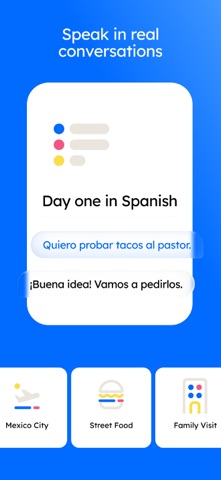
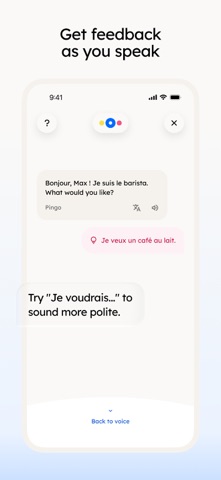
Pingo AI is a language-learning app that builds speaking fluency by letting you talk to an AI partner in *real-life scenarios* — ordering at a restaurant, booking a hotel, making small talk. You speak out loud inside these roleplays, and the AI corrects your pronunciation and phrasing on the fly, adapted to your level. Instead of grammar drills and flashcards, it focuses on ‘the nerve to speak and the reps to get comfortable,’ which sets it squarely apart from Duolingo’s gamified vocabulary loop.
It was built by Michael Xing (co-founder & CEO) and Morrie Schonfeld (co-founder & COO). The two were freshman-year college roommates who practiced Chinese together every week — Michael fluent, Morrie a long-time learner. Both barely in their early twenties, they were accepted into Y Combinator’s S25 batch.
They launched in January 2025. The growth that followed was absurd: peak ~70% month-over-month, $500K MRR (~$6M ARR run-rate) within 14 months, and past 750K users. YC has called it one of its fastest-growing consumer startups — and they got there not by pouring money into ads, but on the back of one thing: ‘funny’ content on TikTok. The next section breaks down exactly how.
Pricing
Subscription: $14.99/mo or $99.99/yr (~45% off annually). Free trial available.
Based in: United States (San Francisco)
App screens


Images are served directly by the App Store / the product's own site (not rehosted here) — Pingo AI
How it was built
- Turn your own lived experience — weekly Chinese conversation practice between college roommates — directly into the product concept
- Focus entirely on the gap Duolingo leaves open, the fear of speaking, and throw out grammar drills and vocabulary memorization
- Make role-play in real situations the core experience — ordering at a restaurant, booking a hotel, small talk — with the AI correcting pronunciation and phrasing on the spot at the user's level
- Keep pricing to a simple binary of $14.99/month or $99.99/year (about 45% off) and let a free trial deliver the 'talking to the AI' moment once
How it got users
- Never pitch the feature — show only the single moment where a user speaks a foreign language, the AI calls out how off the pronunciation is, and they turn red (no ad smell, pure curiosity)
- Pick pronunciation gags that are funny to native speakers and non-speakers alike, maximizing the addressable audience — a language app watched even by people who don't study languages
- Seed multilingual material that makes three layers comment at once (people wanting a translation, native speakers laughing at the miss, and people explaining it), driving comment volume and dwell time into the algorithm
- Don't chase a one-off hit — roll the winning format out across creators and scale on volume (624 videos, 200M+ cumulative views, 27M+ likes)
- Convert the huge free inflow from virality with a core experience habitual enough to be done daily
- Early ad spend
- Paid ads were never the main engine — TikTok creator videos kept CAC near zero
The repeatable playbook
- 1Turn your own (and your co-founder’s) lived experience — weekly Chinese practice — directly into the product concept
- 2Commit to the gap competitors (Duolingo) leave open: the fear of speaking, the ‘speaking wall’
- 3Don’t advertise features — show the single moment of ‘the AI roasts my pronunciation’ to spark curiosity
- 4Pick pronunciation gags funny to natives and non-speakers alike to maximize the addressable audience
- 5Use multilingual mistakes so translation-seekers, natives, and explainers all comment — feeding the algorithm
- 6Don’t chase one viral hit; scale the winning format across creators by sheer video count (624 videos)
- 7Convert with a simple two-option paywall ($14.99/mo or $99.99/yr) on a habit-forming core experience
The hard parts
The product’s core is the founders’ own failure. Morrie studied Chinese for 8 years and still couldn’t get the words out in real conversation — that firsthand frustration with textbook-first learning falling apart at the speaking stage is exactly what produced the decision to go all-in on speaking practice alone.
Deep dive
【Deep dive】Here we break down the *repeatable* growth playbook behind climbing to $500K MRR without ads as the main driver — on TikTok creator videos alone. By Pingo’s own public figures, related videos total 200M+ views, 27M+ likes, across 624 videos. The biggest lesson: this was not one viral hit but a *manufactured format*.
Why ‘the AI roasts your pronunciation’ works — universal humor
Pingo’s signature format isn’t a feature demo. It’s a single moment: a creator speaks a foreign phrase → the AI calls out how off the pronunciation is → the creator cringes. The lever is that the chosen words are picked to be funny *to natives and to English-only viewers alike*. A botched pronunciation makes people who don’t know the language laugh, and people who do laugh harder. That instantly expands the addressable audience — a language app whose content is watched even by people not learning a language. That’s the foundation of 200M views.
Don’t sell the feature — drive curiosity
Most app UGC explains ‘this feature is useful,’ which reads as an ad and gets skipped. Pingo does the opposite: it shows the AI’s *personality* (its blunt, unlike-Duolingo way of correcting you) and provokes ‘wait, what is this thing?’ curiosity. Zero feature explanation, yet the brand differentiation lands. Because it’s consumed as a meme/entertainment rather than an ad, distribution cost collapses.
The comment section as fuel — a three-layer design
Pingo’s comment sections are engineered so three kinds of people show up at once: (1) people who want a translation (‘what did it just say?’), (2) native speakers laughing at the creator’s mistakes, and (3) people who jump in to translate and explain. When these three layers start talking, comment count, watch time, and revisits climb — and TikTok’s algorithm pushes the video further. Deliberately using mistakes across many languages means one video reaches several language communities at once.
Escaping single-hit dependence — the 624-video machine
The key differentiator is *not* relying on one home run. 624 videos means the format (pronunciation roast × universal humor × multilingual comment bait) was nailed down and then scaled across creators in volume. If one video flops, total distribution barely dips. For an indie developer, this is the crux: find the format that hits, then scale it with *the number of videos*, not luck.
The TikTok → free trial → subscription funnel
The exit is a simple two-option paywall: $14.99/mo or $99.99/yr (~45% off). The free trial gets users to ‘talk to the AI’ once, then converts that into a daily habit via roleplay conversations. Pronunciation correction is never ‘done’ in one session — high inherent repeat usage, which pairs well with subscriptions. Funneling enormous viral free traffic into a habit-forming core experience is the real engine behind ~70% MoM.
Unit math (approximate)
$500K MRR ÷ 750K users = ~$0.67 per registered user per month — consistent with a classic freemium shape where most users are free and a slice convert. At $99.99/yr, that implies paying users in the tens of thousands. Crucially, CAC is held near zero via organic TikTok, which likely gives Pingo a far healthier margin structure than ad-dependent competitors.
FAQ
- What country is Pingo AI from? Who built it?
- It’s a US startup accepted into Y Combinator’s S25 batch. It was co-founded by former college roommates Michael Xing (CEO) and Morrie Schonfeld (COO), both barely in their early twenties.
- How much does Pingo AI cost? Is there a free version?
- Pricing is a subscription: $14.99/month or $99.99/year (about 45% cheaper annually). You can try the ‘talk to the AI’ experience on a free trial before subscribing.
- What does Pingo AI do? How is it different from Duolingo?
- It’s a speaking-focused language app: you roleplay real scenarios (ordering at a restaurant, small talk) with an AI that corrects your pronunciation and phrasing on the fly. Unlike Duolingo’s flashcards and grammar drills, it commits entirely to speaking practice and reps.
Cross-case “growth playbook” report (coming soon)
We're building a paid report that aggregates every case in this database: which acquisition tactics worked, in which categories, and how well — insights you can't see from a single story. Get notified first when it launches.
Related cases
- LearningJungle
AI Flashcard App Jungle — From a 21-Hour First Build to ~$1.1M ARR by Zeroing In on Medical-Student Influencers
Jungle, an AI study app by Julian Alvarez and David Glass, turns any material or YouTube video into AI-generated flashcards and quizzes. Built first in 21 hours, it zeroed in on memorization-heavy medical students via TikTok influencers, reaching 1.5M+ learners and ~$1.1M ARR since February 2023.
Monthly (est.)$92k/moTikTokInfluencer marketingShort-form video - LearningCoconote
“Never Take Notes Again” — How Coconote Hit $6.7M ARR in 18 Months With Almost No Ad Spend
Two ex-Loom builders made an AI note app for students. With zero funding and almost no ads, it reached ~$6.7M ARR at ~50% margin in 18 months and was acquired by Quizlet.
18 monthsMonthly (est.)$558k/moYouTubeSEOShort-form videoInfluencer marketing - LearningFeynman AI
The Vietnamese Solo Dev Who Quit His Job to Build Feynman AI — Growing a Study App to 370K Users and ~$19K/mo with No Ad Budget, ‘Volume over Virality’ TikTok, and One Rename
An AI study app by Vietnamese solo dev Alex Nguyen (a former $3,200/mo engineer). It turns lecture recordings, PDFs and videos into notes, mind maps, flashcards and quizzes. With zero ad budget — just mass-produced TikTok across many accounts and App Store SEO — it reached ~370K users and ~$19K/mo.
7 monthsMonthly (est.)$19k/moTikTokShort-form videoSEOTrend-jacking