45 Apps in a Year, Then Snag — How a 20-Year-Old NYU Student Turned a “Free Stuff Near You” App into $30K/Month in Under 4 Months
A breakout from Benjamin Chen (Benji), an NYU student who shipped 45+ apps in a year. Snag aggregates free local items — furniture, electronics, everyday goods — into one app. Built in hours with Claude Code and pushed through a standardized creator-UGC-to-Meta-ads pipeline, it hit $30K/month, 9,000 paying conversions and 100K users in under four months.
- Monthly (est.)
- $30k/mo
- Time to grow
- 4 months
- Users
- 100K
- Launched
- 2026
Key takeaways
- Don’t bet on one app; drop build cost to 4–5 hours so each app is a trial, not a bet (ship single-purpose apps in volume)
- Ship fast on a standard line: design in Figma → generate with Claude Code → backend on Supabase (bake in auth to clear review)
- Screen creators by interview for ‘virality built in’ (~10% pass), then retainer + CPM to mass-produce videos
The pain point, and how they found it
Free stuff is everywhere — furniture tossed during move-outs, Buy Nothing groups, $0 listings on Facebook Marketplace, community boards — but it’s scattered, so most people miss it. Snag pulls that fragmented ‘free’ into one app. The pain isn’t a novel problem; it’s the universal friction of ‘everyone wants a deal but gives up on the hunt,’ answered by an easy promise: pay a few dollars and unlock access to hundreds of dollars’ worth of goods.
Background & product
Snag helps you find free stuff nearby — furniture, electronics, everyday goods — in one place. It scans across online boards, local groups, marketplaces and community feeds, and surfaces only the items being given away for $0. Users pay a few dollars a month to access those free finds they’d otherwise have to hunt down across a dozen sources.
It was built by Benjamin Chen — ‘Benji’ — a 20-year-old NYU student. The notable part: Snag isn’t his first hit. Over the past year he shipped 45+ apps, and through that repetition he sharpened a repeatable system for how to build and distribute a consumer app. Snag rode that system to ~$30,000/month, 9,000 paying conversions and 100,000+ authenticated users in under four months, listed under Shopping with ~3,300 App Store ratings.
Technically it’s optimized for shipping fast, not for craft. Coding is done with Claude Code, the backend on Supabase, design in Figma — a standardized line that turns out an app (minus backend) in ~4–5 hours (with Loops for email and Mixpanel for analytics). The products are deliberately single-purpose — thin apps around one clear use case — produced in volume. The edge isn’t inside the app; it’s in what happens after it ships.
The growth engine is two-stage: recruit many creators to make UGC-style videos, then promote only the organically-winning videos as Meta (Facebook/Instagram) performance ads. Pricing spans weekly/monthly/yearly/one-time but stays at ‘a few dollars a month’ to maximize conversion. In short, Snag’s story isn’t about a genius app — it’s about a factory that mass-produces apps and drops them onto a standardized distribution pipeline.
Pricing
Free to download with in-app purchases: $5.99–$9.99 weekly, $4.99–$6.99 monthly, or $18.99–$49.99 yearly. The price spread reflects ongoing paywall A/B tests.
App screens


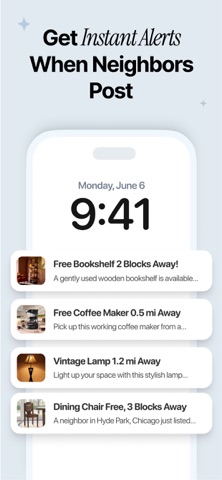
Images are served directly by the App Store / the product's own site (not rehosted here) — Snag
How it was built
- Don't bet on one app — drive build cost down to 4-5 hours so apps become attempts rather than bets (45+ shipped in a year)
- Design each app as a thin single-purpose wrapper around one API
- Ship fast on a fixed line — work backwards from the value proposition and build wireframes and UI in Figma
- Hand that design to Claude Code in the IDE to generate the code, and put the back end on Supabase (with Loops for email and Mixpanel for analytics)
- Build account creation and authentication properly from the start so App Review passes — cut corners here and the production line jams at review
- Price across weekly, monthly, yearly and lifetime tiers at an effective few dollars a month, converting on the asymmetry of 'a few dollars for hundreds of dollars of free stuff'
- What AI did
- Humans do UI design in Figma while Claude Code in the IDE generates the code — 4-5 hours per app excluding the back end
How it got users
- Screen creators by interview — approach many, judge whether virality is built in, and pass roughly 10% (keeping 9-10 out of every 100 seen)
- Put those who pass on a monthly retainer plus CPM and have them mass-produce videos
- Before spending anything on ads, filter for winners with a hard gate: only videos that exceed 50,000 organic views advance
- Repurpose the winners as Meta ad creative and measure ROAS and CTR at a $50 daily test budget first
- Scale only the ones clearing ROAS above 1 or a high CTR, stepping $50 to $100 to $200 to $300
- Watch for ad fatigue and keep restocking fresh winners from the supply line as creative burns out (roughly $1-2K in subscription profit per 100K UGC views)
- Early ad spend
- Only winners past 50K organic views become Meta ad creative, scaled up from a $50/day test
The repeatable playbook
- 1Don’t bet on one app; drop build cost to 4–5 hours so each app is a trial, not a bet (ship single-purpose apps in volume)
- 2Ship fast on a standard line: design in Figma → generate with Claude Code → backend on Supabase (bake in auth to clear review)
- 3Screen creators by interview for ‘virality built in’ (~10% pass), then retainer + CPM to mass-produce videos
- 4Before spending on ads, make ‘50K organic views’ the qualifying bar for a winning video (select on free reach)
- 5Reuse winners as Meta ads: $50 test → scale only ROAS>1 to $100 → $200 → $300 (refill fatigued ads with new winners)
- 6Price as an asymmetric ‘a few dollars for hundreds of dollars’ offer and recoup on conversion (adoption over ARPU)
The hard parts
This playbook lands nobody’s first app — Snag was preceded by 45 iterations plus an established creator network and ad operation. The numbers depend on UGC-to-Meta ROAS and soften when ads fatigue. An aggregator of ‘free stuff’ sits on public data, so defensibility is thin and it’s easy to copy. Miss the unglamorous factory work — volume, selection, ad ops — behind the one flashy hit, and you can’t reproduce it.
Deep dive
【Deep dive】Snag’s real product isn’t ‘the Snag app.’ It’s the repeatable system: build in 4–5 hours, drop onto a standardized pipeline, amplify only the winners with ads. Here’s the factory line, taken apart.
The product is ‘disposable,’ the asset is the ‘factory’ — why 45 apps. Benji shipped 45+ apps in a year. Most fizzle, but that’s by design, not failure. Drive the cost of one app down to 4–5 hours and an app stops being a bet and becomes a trial. Across 45 attempts, meta-level lessons accumulate — which single-purpose ideas land, which video angles spread — and those lessons raise the odds of drawing a winner like Snag. The mindset shift for indie builders: don’t bet on one app; ship many, cheap and fast, and let the system find the hit.
Build in 4–5 hours: the Claude Code + Supabase + Figma line. Benji’s build follows the same shape every time — reverse-engineer the value proposition, wireframe and design the UI in Figma, hand the designs to Claude Code in the IDE to generate the code, host the backend on Supabase. Because each app is a thin single-purpose wrapper around one API, this takes ~4–5 hours minus the backend. Crucially, account creation and auth are baked in from the start so the app clears App Store review (skimp here and the production line jams in approval). He doesn’t win on technology; he reduces technology to a fast, repeatable routine.
Growth engine, part 1: the creator-sourcing funnel (interview 100, keep 10). Half of Snag’s growth is decided at ‘hiring.’ Benji reaches out to many creators and interviews for ‘virality built in.’ The pass rate is ~10% — keep only 9–10 of every 100. The survivors go on a monthly retainer plus CPM and mass-produce videos. The gate that matters: only videos that clear 50,000 organic views advance to the ad stage. In other words, winning creatives are selected by free view counts before a dollar of ad spend.
Growth engine, part 2: validate organically, then move to Meta ads (the ROAS ladder). Winning videos (50K+ views) become Meta ad creative. He doesn’t go big immediately: a $50/day test measures ROAS and CTR, and only ads with ROAS above 1 / high CTR scale up $50 → $100 → $200 → $300. He watches for ad fatigue and keeps refilling with fresh winners from the creator pipeline. As a rule of thumb, every ~100,000 UGC views yields ~$1–2K in subscription profit. The point is that ‘prove demand, then spend’ is operationalized through creator supply and numeric gates.
Pricing & paywall: ‘a few dollars for hundreds of dollars’ — conversion via perceived value. Pricing spans weekly/monthly/yearly/one-time but stays at ‘a few dollars a month.’ The logic is clean: Snag promises access to hundreds of dollars’ worth of free goods, so a few dollars looks absurdly cheap against perceived value. That asymmetric offer drives a high conversion rate (9,000 paying out of 100K users). Acquire cheap and wide, recoup on conversion — the Cal-AI-style ‘adoption over ARPU,’ supercharged by the strong pull of free finds.
The limits of repeatability: this is a hit-rate game. Honestly, this playbook won’t land anyone’s first app. Snag shines because 45 prior iterations, an established creator supply network and a dialed-in ad operation came first. And the economics lean hard on UGC-to-Meta ROAS; when ads fatigue, the numbers soften. An aggregator of ‘free stuff’ sits on public data, so its defensibility is thin and it’s easy to copy. The lesson isn’t ‘clone Snag’ — it’s ‘treat distribution as a repeatable skill; make apps cheap, fast and disposable, and let the system find the winner.’
Cross-case “growth playbook” report (coming soon)
We're building a paid report that aggregates every case in this database: which acquisition tactics worked, in which categories, and how well — insights you can't see from a single story. Get notified first when it launches.
Related cases
- Health & FitnessCal AI
Built in High School at 17 — How Cal AI’s “Just Snap Your Food” Calorie Tracker Hit ~$50M ARR in 18 Months and Sold to MyFitnessPal
A photo calorie tracker built by Zach Yadegari and a teenage founding team: snap your meal and AI estimates the calories. Bootstrapped to ~$50M ARR and 15M downloads in 18 months, it was acquired by MyFitnessPal in 2025.
18 monthsMonthly (est.)$4.2M/moTikTokShort-form videoInfluencer marketingInstagram - Career & JobsSprout
Sprout, the “Tinder for jobs” built by a non-engineer in college — betting on distribution over building to reach $250K MRR in 8 months
A job-search app built by Nicole Cheung while at Claremont McKenna: swipe to apply, AI tailors a resume and cover letter per role, and an agent auto-submits on the employer’s site. With no ads and no VC it hit $250K MRR in 8 months — reusing the same creator-army playbook behind her earlier beauty app Glam Up (1M users in 6 months).
8 monthsMonthly (est.)$250k/moTikTokInstagramYouTubeShort-form video - Beauty & Self-improvementGlowUp
From ~10 Failed Apps to GlowUp — How a 24-Year-Old Solo Canadian Builder Used $0 in TikTok Ad Spend to Reach $800K in a Year and $1.2M ARR
GlowUp is a makeup app: upload a look you love, AI applies it to your own face and suggests the products to recreate it. After ~10 flops, Louis-David Paul-Hus launched it with $0 ad spend via TikTok and reached $800K in a year and $1.2M ARR.
12 monthsMonthly (est.)$100k/moTikTokShort-form videoInfluencer marketingInstagram