Born at a Rainy Bus Stop — How a Self-Taught Scottish Designer Grew Momego to 5.2M Installs and $30K/Month on Localized ASO Alone
A public-transit tracker built solo by ex-graphic-designer John McEvoy: real-time bus/train locations and arrival times. Without paid virality, he used per-city ‘localized ASO’ (keyword localization) to spread across 160 cities — reaching 5.2M installs, 400K DAU and $30K MRR, all as a one-person shop.
- Monthly (est.)
- $30k/mo
- Users
- 5.2M
- Launched
- 2012
Key takeaways
- Target ‘unglamorous daily-use utility × search’ niches (small everyday pains are universal, no virality or AI required)
- Make localized ASO the primary engine: optimize store metadata to each locale’s real search terms, opening a new organic pipe with every city you add
- Design retention with reverse trials + widgets/Live Activities (wedge into the lock screen daily so the reason to cancel disappears)
The pain point, and how they found it
‘How many minutes until the next bus?’ is a tiny, universal anxiety everywhere. Standing at a rainy Edinburgh bus stop, McEvoy felt it sharply: ‘Uber lets you watch the car approach on a map — why can’t public transit?’ Incumbent journey planners are good at route search but weak at the real-time ‘where is my bus right now.’ That small, universal complaint became the entry point to a market he could roll out across 160 cities.
Background & product
Momego is a public-transit tracker that shows the live location and predicted arrival of buses and trains on a map. Widgets and Live Activities put ‘minutes until the next one’ on your lock screen, and stop alerts keep you from missing your stop. It’s deliberately not a flashy AI product — it leans all the way into an unglamorous utility people use every single commute.
It was built by John McEvoy of Edinburgh, Scotland. Originally a graphic designer, in 2012 he taught himself to code to scratch his own itch — ‘I just want to know when my bus is coming’ — and shipped an arrival app for his home city. He has developed it solo ever since (as a one-person Transit Now ltd, under the TravelWhiz brand), and it now covers 160 cities worldwide.
The striking part is how he gets users. Momego does not lean on influencers, viral videos, or big paid campaigns. Its primary growth engine is relentless ‘localized ASO’ — optimizing App Store titles and keywords in the local language for each city, so the app ranks for the real search terms people use (‘bus times,’ or the local-language equivalent). By crafting store metadata down to each country’s language, he pulls new users from each city’s organic search with no CAC. A solo indie developer out-ranking well-funded transit giants on the search surface.
Monetization didn’t click overnight. It went through three rebuilds — up-front paid, then an ad-supported model, then today’s subscription — before it fit. Free core features with premium extras (widgets/Live Activities) behind a subscription now drive $30K MRR and ~400K DAU. Call it a ‘14-year overnight success’: a case study in slow compounding.
Pricing
Free download. In-app purchases run $1.49–$5.00/month, $8.99–$29.00/year, and an $89.00 lifetime pass (per App Store; several prices appear for the same period, so it looks like paywall A/B testing).
App screens
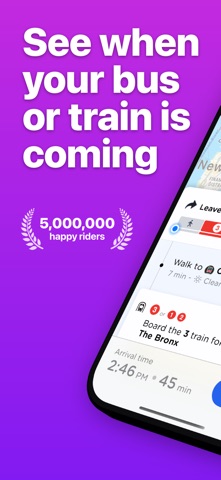
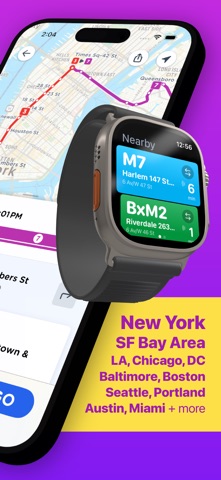

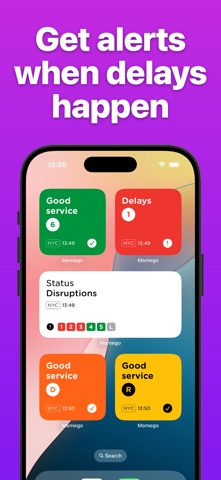
Images are served directly by the App Store / the product's own site (not rehosted here) — Momego
How it was built
- Start from your own itch — in 2012 a graphic designer taught himself to code because he wanted to know when his bus would arrive, and built an arrival app for his home city of Edinburgh
- Commit to boring daily utility for commuters rather than flashy AI
- Design retention around widgets and Live Activities — put 'minutes until the next one' on the lock screen every morning so the app lodges in daily life and the reason to cancel disappears
- Use a reverse trial (premium first, dropping to the free tier when it expires), which works better on mobile than a conventional free trial
- Assume monetization won't land on the first try — this went from paid downloads to ads to subscriptions before it clicked
- Continuously A/B the icon, pricing and onboarding to raise conversion operationally
How it got users
- Skip influencers, viral video and large paid campaigns, and make thorough localized ASO the main engine
- Optimize App Store titles, subtitles and keywords per city and per language in the local tongue, ranking for the terms people actually search there rather than settling for bulk translation
- Every new city opens another tap of organic search for that city — it scales at zero CAC, and because most competitors optimize only for English-speaking markets, it's a gap where an individual beats well-funded incumbents
- Layer Apple Search Ads thinly and profitably onto only the keywords localized ASO has already proven (demand first, ads second)
- Compound slowly — starting in 2012, adding one city and optimizing one language of store metadata at a time, reaching 160 cities worldwide, about 400K DAU and $30K a month
- Early ad spend
- Apple Search Ads layered thinly and profitably onto keywords already proven organically — no large paid campaigns
The repeatable playbook
- 1Target ‘unglamorous daily-use utility × search’ niches (small everyday pains are universal, no virality or AI required)
- 2Make localized ASO the primary engine: optimize store metadata to each locale’s real search terms, opening a new organic pipe with every city you add
- 3Design retention with reverse trials + widgets/Live Activities (wedge into the lock screen daily so the reason to cancel disappears)
- 4Layer Apple Search Ads thinly and profitably, only on keywords organic ASO has already proven (validate first, ads later)
- 5Don’t expect to nail monetization once — plan to rebuild it (Momego pivoted paid → ad → subscription)
- 6Continuously A/B icons, pricing, and onboarding to lift conversion operationally
The hard parts
Momego is a ‘14-year overnight success.’ McEvoy, an ex-graphic designer, taught himself to code, and from its 2012 start to today he cycled through two monetization models (up-front paid and ad-supported) that didn’t fit before landing on subscription. There’s no splashy launch tale — it’s the product of unglamorous compounding, adding one city and one localized store listing at a time.
Deep dive
【Deep dive】Momego is a rare ‘non-AI, non-viral, non-US’ utility in this database. How did an utterly unflashy transit tracker compound to $30K MRR as a one-person shop? Broken down in order of impact.
Moat #1: Localized ASO = ‘translatable’ user acquisition. The biggest weapon is crafting App Store metadata (title/subtitle/keywords) per city and language — ‘localized ASO.’ Transit search terms differ by country (‘bus times’ in English; the local-language equivalent elsewhere). McEvoy doesn’t settle for bulk machine translation; he optimizes to the real search terms of each locale. So every new city he supports opens a fresh pipe of ‘that city’s organic search.’ It scales at zero CAC — and because most competitors optimize mainly for English, it’s a gap where an individual can beat well-funded incumbents. The bulk of 5M+ installs traces to this organic source.
Moat #2: Apple Search Ads layered on *after* organic works. Rather than forcing scale with ASA, McEvoy layers ads profitably onto keywords that localized ASO has already proven. The order is ‘validate demand and winning angles organically → then spend a thin layer on top.’ It’s the transit-utility version of Cal AI’s ‘validate first, ads later’ — so budget isn’t burned on terms that don’t land.
Retention design: reverse trials × widgets/Live Activities. The revenue base is subscription *retention*. In his own interview, McEvoy says that on mobile a ‘reverse trial’ (give premium up front, drop to free when it expires) beats the standard free trial. On top of that, a widget and Live Activity that surface ‘minutes to the next bus’ on the lock screen every morning wedge the app into the user’s daily path — which erases the reason to cancel. For a utility, the fastest churn-killer is ‘remind them daily through the feature itself.’
Slow compounding: 14 years, three monetization pivots. Momego started in 2012. It went paid → ad-supported → subscription — three rebuilds — before the model fit. There’s no splashy launch story; instead it compounded through the unglamorous grind of ‘add one more city, optimize one more language’s store listing, swap the pricing model based on tests.’ It’s the opposite of the ‘18-month rocket’ — a model for long-horizon, low-risk indie development.
Takeaways for indie builders. (1) Even without flashy AI or virality, there are still ‘daily-use utility × search’ niches you can win. (2) Treat ASO not as a one-off but as an asset that grows with every city and language (write your own Japanese store copy too). (3) Layer paid ads thinly, only after organic reveals the winning terms. (4) For utilities, drive retention by wedging into daily life via widgets/Live Activities. (5) Don’t expect to nail monetization on the first try — plan to rebuild the model until it fits the product.
Cross-case “growth playbook” report (coming soon)
We're building a paid report that aggregates every case in this database: which acquisition tactics worked, in which categories, and how well — insights you can't see from a single story. Get notified first when it launches.
Related cases
- LearningCoconote
“Never Take Notes Again” — How Coconote Hit $6.7M ARR in 18 Months With Almost No Ad Spend
Two ex-Loom builders made an AI note app for students. With zero funding and almost no ads, it reached ~$6.7M ARR at ~50% margin in 18 months and was acquired by Quizlet.
18 monthsMonthly (est.)$558k/moYouTubeSEOShort-form videoInfluencer marketing - OtherSnag
45 Apps in a Year, Then Snag — How a 20-Year-Old NYU Student Turned a “Free Stuff Near You” App into $30K/Month in Under 4 Months
A breakout from Benjamin Chen (Benji), an NYU student who shipped 45+ apps in a year. Snag aggregates free local items — furniture, electronics, everyday goods — into one app. Built in hours with Claude Code and pushed through a standardized creator-UGC-to-Meta-ads pipeline, it hit $30K/month, 9,000 paying conversions and 100K users in under four months.
4 monthsMonthly (est.)$30k/moInfluencer marketingTikTokInstagramShort-form video - OtherLive Tourney
Built Nights & Weekends by a Meta AI Engineer — How Live Tourney Turned the Boring Niche of Golf-Tournament Software Into $30K+/Month, and Made Him Quit Big Tech
A golf-tournament management SaaS built nights and weekends by Matt Robinson, then a Meta engineer, out of his own love of golf. By undercutting the pricey, clunky incumbent Golf Genius on price and simplicity, he bootstrapped it to 150 courses, $30K–$40K/month and ~$350K ARR — then quit Meta once it outgrew his salary.
42 monthsMonthly (est.)$30k/moSEOWord of mouth