Built in 3 Days by a Non-Technical, Non-Native Mexican Founder — How Prayer Lock (“Pray to Unlock Your Apps”) Hit $20K/Month in 6 Months on Pure UGC Volume
A screen-time blocker built solo by Mauricio Baron: a faith-focused app that locks your other apps until you finish a prayer. A non-technical, non-native-English founder, he vibe-coded it in ~3 days. With no big following and no ad budget, he mass-produced ~40 pieces of UGC a day across 11–12 accounts and reached ~$20K/month in six months (its App Store listing now holds 4.9★ across ~35K ratings).
- Monthly (est.)
- $20k/mo
- Time to grow
- 6 months
- Launched
- 2025
 Mau Baron@maubaron
Key takeaways
- Minimize build time via vibe coding (ship an MVP in days) and pour the freed time into acquisition
- Translate a pain you personally have into the language of a specific community (prayer × app-lock)
- Push volume via many accounts × high frequency (~40 posts/day across 11–12 accounts on TikTok/IG/YouTube)
The pain point, and how they found it
“I’m on my phone so much it steals my focus — and even my time to pray.” For people of faith that guilt is everyday and specific. Generic blockers (screen-time / focus locks) are secular and don’t plug into a faith motivation. Prayer Lock nails one thing — it locks the app you tried to open until you finish a prayer — translating the universal desire to reclaim focus into the language of a specific community. The pain wasn’t found via market research; the founder had it himself and built what he wanted.
Background & product
Prayer Lock is a screen-time blocker: when you try to open TikTok, Instagram, a game, and so on, the screen locks, and only after you complete a guided prayer does the app open. Prayers can be personalized, and you can set emergency unlock times and prayer windows. In short, it forces a “pause and turn to God before you open the app” moment.
It was built solo by Mexican indie developer Mauricio (Mau) Baron. What stands out is that he was the archetypal have-not: not an engineer by training, not a native English speaker, with no viral TikTok account and no large X following. Even so, in late April 2025 he shipped the app in about three days using “vibe coding” — instructing an AI to build it. The tech itself wasn’t the moat; on top of AI erasing the “can I even build it?” barrier, his real fight was elsewhere.
That fight was distribution. With no capital to pour into ads and no existing audience, he chose blunt volume. Across 11–12 accounts spanning TikTok, Instagram Reels, and YouTube, he pushed roughly 40 short videos a day. The content wasn’t expensive production but short, reaction-style clips showing the app demanding a prayer when you try to open something. When one hit, he doubled down on that winning pattern and fanned it out.
The result of this volume game: ~6M cumulative content views at the time, with downloads stacking up (the App Store listing now holds 4.9★ across ~35K ratings, so cumulative downloads are well above that). Revenue was $14,764 in November 2025 and closed December at ~$20K (with ~$9K ad spend and ~50% margin), reaching a “$20K/month indie app” about six months after launch. A non-technical, non-native individual with no big following and no connections got here on nothing but AI build speed × UGC volume — and that is the real highlight of this case.
Pricing
Free download. The in-app purchase “pro” is listed from $9.99 to $79.99 (per App Store; no billing period is shown and the same item appears at several prices, so neither the period nor a single price is asserted here).
App screens


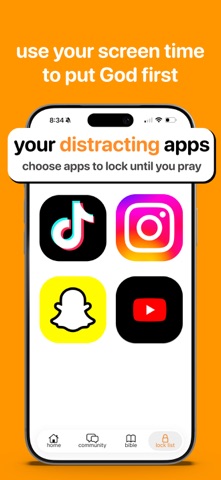

Images are served directly by the App Store / the product's own site (not rehosted here) — Prayer Lock
From the founder (primary source)

How it was built
- Start from the premise that the barrier to building is gone and compress build time with vibe coding — a non-engineer directed AI and assembled the app in about three days
- Redirect most of the time saved into acquisition — the reallocation matters more than building an elaborate app
- Translate a pain point you hold personally into the language of a specific community (prayer meets app locking)
- Narrow the core experience to this: opening TikTok or a game locks the screen, and only completing a guided prayer unlocks it
- Let users personalize the prayers, the emergency unlock duration and the hours during which prayer is required
- Time to first release
- 3 days
- What AI did
- A non-engineer and non-native English speaker implemented it through vibe coding in about three days, and the video production and posting pipeline is reported to be automated as well
How it got users
- Push volume through many accounts at high frequency — roughly 40 short videos a day across 11-12 accounts on TikTok, Instagram Reels and YouTube
- A few posts a day on one account isn't enough attempts; many accounts at high frequency pulls the odds of something landing away from luck and toward volume
- Don't plan the hook, find it through at-bats — about 40 videos in, the format that landed was a reaction video showing the core experience itself: being asked to pray when you try to open an app, and either balking or accepting
- Treat production as a factory line rather than craft — templated, cheap, disposable and automated
- Nail the winning creative and the funnel organically first, then add advertising as an amplifier; ads are not the instrument for finding winners
- Run the structure December showed: about $20K in revenue against about $9K in ad spend, roughly 50% margin
- Early ad spend
- Introduced only after the winning angle was settled organically — December 2025 ran about $9K of ad spend against roughly $20K in revenue, near 50% margin
The repeatable playbook
- 1Minimize build time via vibe coding (ship an MVP in days) and pour the freed time into acquisition
- 2Translate a pain you personally have into the language of a specific community (prayer × app-lock)
- 3Push volume via many accounts × high frequency (~40 posts/day across 11–12 accounts on TikTok/IG/YouTube)
- 4Don’t plan the hook — find it with at-bats (~40 tries to land: a reaction clip showing the product’s core experience)
- 5Make production a factory line, not works of art (templated, low-cost, disposable, automated mass output)
- 6Lock in the winning creative organically first, then amplify with ads (keep the validate→amplify order)
The hard parts
What worked wasn’t the peculiarity of a faith subject but the order itself: compress build time → multi-account volume → buy the hook with at-bats → amplify with ads after validation. But reproducibility has limits — screen-time/blocker apps are a red ocean, and stopping the volume tends to stop the views and downloads. The energy of a faith community amplified how hard the winning clip landed; in a low-passion niche the same volume may convert worse. The headline $20K/month is a good month on top, resting on the labor of near-full-time content operations — read it with that discount.
Deep dive
【Deep dive】The essence of Prayer Lock isn’t “a faith app” — it’s an acquisition system a have-not indie developer can reproduce. Here’s what actually worked.
Order #1: Since the build barrier is gone, the fight starts at distribution. Mau isn’t an engineer, yet he shipped an MVP in ~3 days via vibe coding. The lesson isn’t “AI can build it” but the dynamic that in a world where building is table stakes, the edge moves to whether you can distribute. So he didn’t spend months building — he shipped fast and poured most of his time and effort into acquisition. What indies should copy isn’t “build an elaborate app” but the reallocation: compress build time and dump the saved time into building the top-of-funnel.
Order #2: Use volume to buy a huge number of algorithm ‘lottery tickets.’ His acquisition wasn’t influencer-dependent or luck-of-the-viral; it was blunt volume. Across 11–12 accounts on TikTok, Instagram Reels, and YouTube, he pushed ~40 short videos a day. A few posts a day from one account isn’t enough attempts, but many accounts × high frequency turns “some single video cracks the algorithm” from luck into something you pull toward you by volume. When one hits, he goes all-in on that framing and fans it out. To sustain that count solo, the content is low-cost, templated, disposable UGC.
Order #3: The winning ‘hook’ isn’t planned — it’s found after ~40 tries. Mau didn’t know the winning creative up front. It took ~40 attempts to land on the hook that stuck — not a high-production piece, but a reaction clip showing the product’s core experience itself: being asked to pray (and balking, then accepting) when you try to open an app. The lesson is clear: hooks aren’t designed in a meeting; you secure enough at-bats (posts) and let the market pick. Which is exactly why the volume in #2 is the precondition.
Order #4: Validate demand organically, then add ads as an amplifier. He didn’t lean on ads from the start. First he locked in “what framing lands” and “the path to a download” with organic UGC, then amplified the proven winners with paid. December’s split: ~$20K revenue against ~$9K ad spend, ~50% margin. The key: ads came in later as a device to amplify a found winner, not to find the winner. Reverse the order — ads before validation — and you just melt cash on creative that doesn’t land.
Automating UGC: how one person runs 40 posts a day. Forty posts a day across many accounts breaks under manual labor. Prayer Lock automates this; secondary breakdowns describe a pipeline pairing a Gemini-class model with Python to mass-produce and post templated videos (the exact stack isn’t disclosed by the founder, so we don’t assert tool names as confirmed fact). The point is turning creative production from “works of art” into “a factory line” — you win on the throughput of the line, not the polish of a single video.
Limits to reproducibility (honestly). What worked here isn’t the peculiarity of a faith subject but the order itself: (1) compress build time, (2) multi-account high-frequency volume, (3) buy the winning hook with at-bats, (4) amplify with ads after validation. But there are limits: screen-time/blocker apps are a crowded ‘red ocean,’ and if you stop the volume, the numerator (views, downloads) tends to stop too. The strong community energy of faith also amplified how hard the winning clip landed; in a low-passion niche the same volume may convert worse. And the numbers are a good month on top; a foundation of near-full-time content operations (the labor of keeping the line running) should be discounted when you read them.
Cross-case “growth playbook” report (coming soon)
We're building a paid report that aggregates every case in this database: which acquisition tactics worked, in which categories, and how well — insights you can't see from a single story. Get notified first when it launches.
Related cases
- ProductivityPoppy AI
The Opposite of Cheap-and-Wide — How Poppy AI Bootstrapped to a $500K Month in 11 Months on $300–800/Year Pricing
A visual ‘AI workspace’ for creators built by Rafeh Qazi and Naz Dumanskyy: drop your own YouTube videos, PDFs and voice notes onto an infinite canvas and AI generates scripts, posts and ads in your voice. Bootstrapped, on $300–800/year pricing, it hit its first $500K month and ~5,000 creators in about 11 months.
11 monthsMonthly (est.)$400k/moTikTokShort-form videoYouTubeInfluencer marketing - Health & FitnessStella
Audience First, Product Second — How a 4.5M-Follower Creator Used AI (Without Writing a Line of Code) to Take Manifesting App Stella to ~$300K MRR in About Two Months
Immigrant creator Sarah Perl (@hothighpriestess) built Stella with AI (Claude Code / Cursor) despite not being able to code, on top of the 4.5M-follower manifesting audience she’d spent years building. It hit ~$275K–$300K MRR and 12,000 paying subscribers in about two months — a textbook ‘distribution-first’ case.
2 monthsMonthly (est.)$275k/moTikTokInstagramShort-form videoInfluencer marketing - Career & JobsSprout
Sprout, the “Tinder for jobs” built by a non-engineer in college — betting on distribution over building to reach $250K MRR in 8 months
A job-search app built by Nicole Cheung while at Claremont McKenna: swipe to apply, AI tailors a resume and cover letter per role, and an agent auto-submits on the employer’s site. With no ads and no VC it hit $250K MRR in 8 months — reusing the same creator-army playbook behind her earlier beauty app Glam Up (1M users in 6 months).
8 monthsMonthly (est.)$250k/moTikTokInstagramYouTubeShort-form video